Death in the Afternoon - Absinthe and Champagne in Hemingway's Legendary Cocktail
Published: 27.03.2026
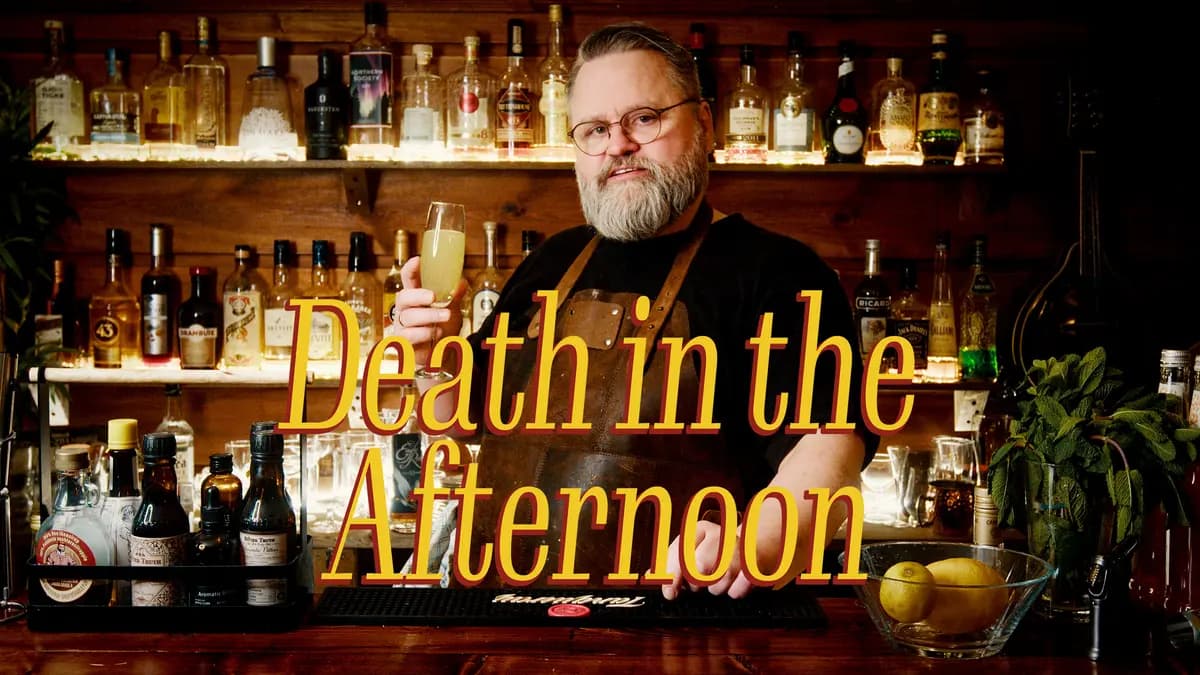
Death in the Afternoon is a cocktail that proves two ingredients can create something both iconic, elegant, and a bit dangerous in expression. With the herbal notes of absinthe and the dry bubbles of Champagne, you get a classic with a distinct personality, strong literary ties, and a lingering taste. Here you will find the recipe, history, technique, and serving tips to succeed at home.
- Servings
- 1 cocktail
- Prep
- 1 min
- Cook
- 4 min
Ingredients
- 30 ml absinthe
- 120 ml well-chilled Champagne (or other sparkling wine)
Instructions
- Mise en place: Prepare a Champagne glass and ensure that both absinthe and Champagne are well chilled.
- Measure 30 ml of absinthe and pour it into the glass.
- Gently top with 120 ml of Champagne.
- Let the bubbles mix the drink naturally.
- Serve immediately without ice and without garnish.
Tommy
Taste: 6, Balance: 7, Drinkability: 9, Would we order it at a bar: Yes
A somewhat special cocktail. The absinthe clearly influences the flavor, but the bubbles make it surprisingly easy to drink. Not the most complex drink, but it goes down very easily.
Snorre
Taste: 8, Balance: 8, Drinkability: 7, Would we order it at a bar: Yes
Good balance between absinthe and bubbles. You can tell it is strong.
Death in the Afternoon is closely tied to Ernest Hemingway. The cocktail was published in the cocktail book So Red the Nose, or Breath in the Afternoon from 1935, where Hemingway contributed his own recipe. The classic idea is very simple: absinthe topped with ice-cold Champagne until the drink takes on a slightly cloudy, opalescent color. The name refers to Hemingway's non-fiction book Death in the Afternoon from 1932, which is about Spanish bullfighting.
There are several modern variations of the proportions, and the original serving method is often described as more potent than what many prefer today. Therefore, a slightly more balanced recipe is often used in modern bars. The historical origin is well known, but the exact standardized specification varies between sources and bar traditions.
Flavor profile:
Death in the Afternoon is aromatic, dry, and pronounced. The absinthe provides clear notes of anise, herbs, and slight bitterness. Champagne contributes high acidity, fine bubbles, and a fresh finish. The result is elegant, intense, and more complex than the ingredient list would suggest.
Glass type or serving suggestions:
Champagne glass. Serve very cold as an aperitif or with savory small dishes like oysters, roasted almonds, olives, or mild white fish.
Death in the Afternoon is a cocktail that stands out already by its name. It sounds dramatic, and it is, both in expression and flavor. At the same time, this is one of the simplest classic cocktails you can make at home. You practically only need two ingredients, a cold glass, and a bit of care regarding temperature and balance. The result is a drink that feels sparkling, aromatic, and intense, with a distinctive combination of anise, herbs, acidity, and fine bubbles.
The first thing that makes Death in the Afternoon interesting is the contrast between simple construction and great flavor. Many cocktails build complexity through many components like bitters, syrups, citrus, and various spirits. Here, the philosophy is the opposite. The absinthe dominates the aroma, while the Champagne lifts and stretches the flavor so that the drink has freshness, length, and elegance. When these two meet, a slightly cloudy tone appears in the glass, often described as opalescent or milky. The visual expression is an important part of the experience, and this transformation is part of the reason why the cocktail has remained a classic.
Historically, the drink is closely linked to Ernest Hemingway. He contributed a recipe in a cocktail book from 1935, and the cocktail already bore the name of one of his books. This makes Death in the Afternoon more than just a drink. It is also a small piece of literary cultural history. At the same time, it is important to keep the history sober and fact-based. It is well documented that Hemingway is associated with the drink, but like many classic cocktails, there are variations in how the recipe is interpreted and served today. Some follow a more potent and historically direct style, while others choose a more moderated modern version that provides better balance in the glass.
In a modern home bar, it is often wise to use 30 ml of absinthe and about 120 ml of well-chilled Champagne. This gives a pronounced cocktail that is still pleasant to drink. If you use too much absinthe, the anise and herbal bitterness can dominate so much that the finesse of the Champagne is lost. If you use too little, you lose much of the identity that makes Death in the Afternoon unique. That is why measuring is important, even though the cocktail seems simple. Small differences are noticeable when the recipe consists of only two ingredients.
Choosing absinthe matters a lot. A quality absinthe will usually have a clear aroma of anise, fennel, and wormwood, with a structured herbal profile that feels clean and long. Harsh, sharp, or unbalanced products will be very noticeable in this drink, as there is no sweetness or juice to round off the edges. Therefore, choose an absinthe that you actually like the aroma of when you smell it. This is often a good sign that it will work in the glass.
The choice of Champagne is also important. A dry style works best. Brut is the safest choice for most. You want freshness, high acidity, and fine mousse, not too much sweetness. This does not mean you necessarily have to use the most expensive bottle you can find. The most important thing is that it is well-made, dry, and served properly cold. Temperature is almost as important as the product itself. Champagne that is too warm gives a less precise result, weaker bubbles, and a flatter overall experience. Death in the Afternoon should feel fresh, tight, and lively from the first sip.
The glass choice is traditionally a Champagne glass. A tall and narrow glass preserves the bubbles well and gives an elegant expression. Some prefer a coupe for the visual aspect, but a classic Champagne glass or flute is usually a better choice when you want to keep the fizz a little longer. Since the drink is served without ice, the glass and ingredients are extra important to keep the temperature low. One of the best tips is therefore to start with a cold glass. Even a few minutes in the refrigerator can make a noticeable difference.
The technique is simple, but it should be calm and controlled. First, pour the absinthe into the glass. Then gently top with Champagne. When you pour slowly, you get a nice integration and a controlled foam layer. There is no need to stir. The bubbles do the job for you. Many of the best classic cocktails have an element of restraint in the technique, and this is a good example of just that. You build the drink, let the ingredients meet naturally, and serve immediately.
Flavor-wise, Death in the Afternoon is not a cocktail for everyone, and that is part of its charm. It is dry, herbal, and mature in expression. If you like anise, herbs, and crisp sparkling wines, there is a good chance this will become a favorite. If you usually prefer fruity or sweeter cocktails, it may feel challenging at first encounter. But that does not mean it is inaccessible. On the contrary, it can be a great entry point to more classic and aromatic drinks, especially if you use a moderate amount of absinthe and a fresh, clean Champagne.
When is this cocktail best suited? It works very well as an aperitif. The bubbles and acidity stimulate the appetite, while the absinthe provides a more aromatic and memorable start than many other sparkling servings. It pairs well before dinner, especially when the menu has salty or delicate flavors. Oysters are a classic companion. Salted almonds, olives, and small bites of seafood also work very well. You can also serve it with a simple starter of white fish, citrus, and herbs, as long as the dish is not too sweet or heavy.
It may be tempting to garnish the drink, but the classic serving is without garnish. This is actually a good choice. Death in the Afternoon is about purity and clarity. A citrus peel can sometimes work, but it pulls the cocktail away from the historical expression. By keeping it unadorned, the focus remains where it should be, on the meeting between absinthe and Champagne.
For content for video or social media, this is a very rewarding cocktail. The visual transition when Champagne is poured over absinthe creates an expression that looks exclusive and almost magical on camera. This makes Death in the Afternoon a strong candidate for short videos, precisely because the recipe is so simple that the viewer can actually recreate it at home without advanced equipment. At the same time, the drink has a history that makes the content feel more substantial than just a quick recipe.
If you want to be extra precise at home, you can think of three keys: quality, cold, and control. Quality is about choosing a good absinthe and a dry sparkling wine with character. Cold is about everything being properly chilled before serving. Control is about measuring the absinthe accurately and topping slowly with Champagne. When all three are in place, the chances are high that the result will be both elegant and balanced.
It is also worth mentioning that this is a cocktail with clear strength. Although Champagne can give a light and festive expression, absinthe is a powerful base. Therefore, the drink should be served and enjoyed with respect. It is fitting to think of Death in the Afternoon as a slow aperitif, not as a quick thirst quencher. It is best enjoyed when it receives a bit of attention.
Today, Death in the Afternoon stands as a good example of why classics still matter. Not because they are always the most accessible, but because they often express an idea very clearly. Here, the idea is simple: intense aroma meets elegant fizz. When it succeeds, you get a cocktail that is both historically interesting and surprisingly relevant. It is suitable for home bartenders who want to explore something with a distinct identity, and for guests who appreciate an aperitif with character.
If you want to make a cocktail that is quick to set up, easy to film, easy to remember, and hard to forget, Death in the Afternoon is a very good choice. It requires few ingredients but rewards precision. It has a known history but withstands modern interpretation. And above all, it shows how much personality can lie in a drink that on paper seems almost too simple to be great. That is why it has retained its place in cocktail history.
Photos
Note: Information may contain errors. Always verify important facts yourself.
What to read next
Division Bell - Mezcal Cocktail with Aperol and Maraschino
Division Bell is a modern mezcal cocktail featuring Aperol, Maraschino liqueur, and fresh lime juice. Developed by bartender Phil Ward at Mayahuel in New York, this cocktail combines smoky agave with bitter orange, cherry, and tart lime. The result is a fresh and complex drink with just four ingredients.

Army & Navy - Classic Gin Cocktail with Orgeat
Army & Navy is a classic gin cocktail made with fresh lemon juice and orgeat. It follows the same structure as a Gin Sour but uses almond syrup instead of regular simple syrup. The result is a tangy and botanical cocktail with a distinct almond flavor, a smoother texture, and a lightly spiced finish.
Homemade Orgeat - Easy Almond Syrup for Cocktails -
Orgeat is a sweet almond syrup used in a variety of classic cocktails. It is particularly associated with Mai Tai, but is also used in drinks like Army & Navy, Trinidad Sour, and Japanese Cocktail. This recipe is a quick shortcut to orgeat, adapted to Norwegian grocery items and made with unsweetened almond drink as a base. The result is a simple homemade version with a distinct almond and floral note and enough body to work well in cocktails.