Monkey Gland Cocktail Classic Recipe and History
Published: 27.02.2026
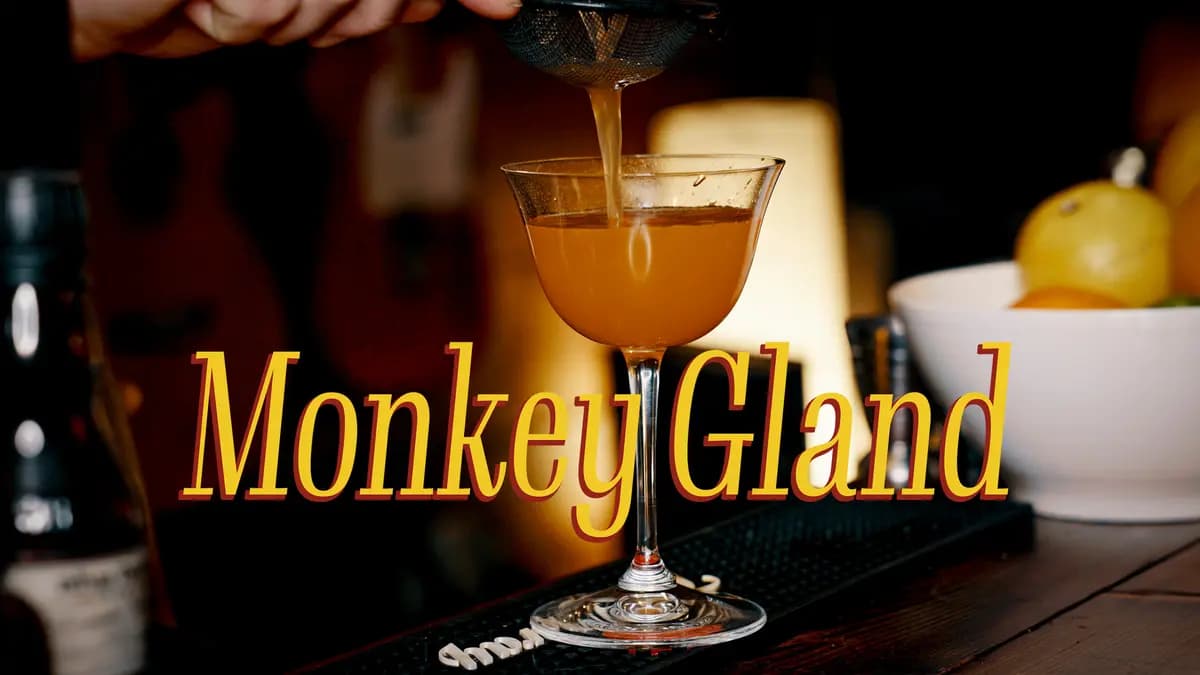
Monkey Gland is an iconic cocktail from 1920s Paris. It combines gin, fresh orange juice, grenadine, and an aromatic hint of absinthe in an elegant and balanced whole.
- Servings
- 1 cocktail
- Prep
- 1 min
- Cook
- 4 min
Ingredients
- 45 ml London Dry Gin
- 45 ml fresh orange juice
- 15 ml grenadine
- 2 dashes Angostura bitters
- 1 dash absinthe or pastis, to rinse the glass
Instructions
- Juice fresh oranges and strain out the pulp.
- Measure all ingredients.
- Chill a cocktail glass.
- Pour a dash of absinthe into the chilled cocktail glass and swirl around to rinse the inside. Discard the excess absinthe.
- Fill a shaker with ice.
- Add gin, orange juice, grenadine, and Angostura bitters.
- Shake vigorously until the outside of the shaker feels icy cold.
- Strain into the absinthe-rinsed glass without ice.
Monkey Gland was created in Paris at Harry’s New York Bar in the early 1920s. The bar was an important gathering place for Americans in exile during Prohibition in the USA. The drink's origin is often attributed to bartender Frank Meier, although some sources mention other names and the details are not entirely clearly documented.
The name refers to an eccentric and undocumented medical theory proposed by surgeon Serge Voronoff, who claimed that transplanting monkey gland tissue could restore vitality. The cocktail has never had any connection to such practices beyond the name, and it certainly contains none of those ingredients. The name was intended as a humorous comment on the contemporary fascination with science and modernity.
Flavor Profile:
Monkey Gland is fruity and aromatic with a distinct orange character. Grenadine adds rounded sweetness, while Angostura provides structure and a slight bitterness. Absinthe gives a subtle anise aromatic layer that elevates the overall experience. The result is balanced between sweet, sour, and bitter, with elegant depth.
Glass Type or Serving Suggestions:
Glass Type: Cocktail glass
Ice Type: No ice in the glass, shaken with ice in the shaker
Monkey Gland is one of the most distinctive classic cocktails from the interwar period. It was developed in Paris at a time marked by cultural exchange, artistic experimentation, and a vibrant nightlife. In the early 1920s, the city was a gathering point for American writers, artists, and travelers seeking freer circumstances than Prohibition in the USA allowed. In this atmosphere, a number of new drinks emerged that combined European and American traditions.
A central venue for this development was Harry’s New York Bar in Paris. Here, international guests met, and the bar became known for serving both American classics and new, creative mixes. Monkey Gland became part of this repertoire. Although the origin is often linked to bartender Frank Meier, there are variations in the storytelling. Such uncertainties are common in cocktail history, as documentation was often lacking and recipes circulated orally.
The name Monkey Gland stems from a medical controversy of the time. Surgeon Serge Voronoff claimed that transplanting glandular tissue from monkeys could rejuvenate humans. The theory sparked both fascination and ridicule. The drink's name was an ironic comment on this trend, reflecting the zeitgeist where science, modernity, and sensation often went hand in hand. It is important to emphasize that the cocktail has never had any connection to such practices beyond the name.
Flavor-wise, Monkey Gland represents an interesting balance. It builds on a classic structure with base, sweetness, acidity, and bitterness. London Dry Gin provides a clear and dry foundation with juniper and botanical notes. Orange juice adds freshness and natural acidity while contributing fruity roundness. Grenadine adds sweetness and a slight pomegranate character, while Angostura bitters provide complexity and structure.
The most characteristic element is the rinsing with absinthe or pastis. This technique involves coating the glass with a thin layer of aromatic anise before pouring in the drink. The result is not a dominating licorice flavor, but a subtle aromatic lift that is noticeable in the aroma before the first sip. This adds depth and makes the drink stand out from other gin-based orange cocktails.
Technically, Monkey Gland is relatively simple to make, but it requires precision. Freshly squeezed orange juice is crucial. Store-bought juice is often too sweet and flat in flavor. Straining out the pulp gives a cleaner texture and a more elegant presentation in the glass. Shaking with ice ensures proper chilling and slight dilution, which is necessary to balance sweetness and bitterness.
The choice of gin also affects the result. A classic London Dry provides clear structure and dryness. Too much sweetness in the grenadine can make the drink unbalanced, so the quality of this ingredient is important. Traditional grenadine made from pomegranate offers better depth than artificially colored sugar syrup.
Serving in a well-chilled cocktail glass without ice gives a clean and elegant presentation. Garnishes like orange peel can enhance the citrus aroma further, while a cocktail cherry adds a more classic touch. Both are acceptable but should be used sparingly to maintain the drink's balance.
Monkey Gland works well as an aperitif. It has enough freshness to stimulate the appetite, yet complexity that makes it interesting to analyze sensorially. It can also serve as a conversation starter due to its unusual name and historical background.
Today, Monkey Gland stands as an example of how cocktail culture reflects its time. It shows how bartenders were inspired by current events and cultural phenomena. At the same time, it demonstrates the classic art of balance in mixology, where simple ingredients are combined with precision to create something lasting.
For those looking to delve into classic cocktails, Monkey Gland is a natural stopping point. It represents both craftsmanship, history, and flavor complexity. With the right technique and quality ingredients, this nearly hundred-year-old drink can still impress today.
Photos
Note: Information may contain errors. Always verify important facts yourself.
What to read next
Division Bell - Mezcal Cocktail with Aperol and Maraschino
Division Bell is a modern mezcal cocktail featuring Aperol, Maraschino liqueur, and fresh lime juice. Developed by bartender Phil Ward at Mayahuel in New York, this cocktail combines smoky agave with bitter orange, cherry, and tart lime. The result is a fresh and complex drink with just four ingredients.
Army & Navy - Classic Gin Cocktail with Orgeat
Army & Navy is a classic gin cocktail made with fresh lemon juice and orgeat. It follows the same structure as a Gin Sour but uses almond syrup instead of regular simple syrup. The result is a tangy and botanical cocktail with a distinct almond flavor, a smoother texture, and a lightly spiced finish.
Homemade Orgeat - Easy Almond Syrup for Cocktails -
Orgeat is a sweet almond syrup used in a variety of classic cocktails. It is particularly associated with Mai Tai, but is also used in drinks like Army & Navy, Trinidad Sour, and Japanese Cocktail. This recipe is a quick shortcut to orgeat, adapted to Norwegian grocery items and made with unsweetened almond drink as a base. The result is a simple homemade version with a distinct almond and floral note and enough body to work well in cocktails.