Tom Kha Gai Thai Soup with Coconut Milk! Quick and Flavorful Dinner
Published: 26.04.2026
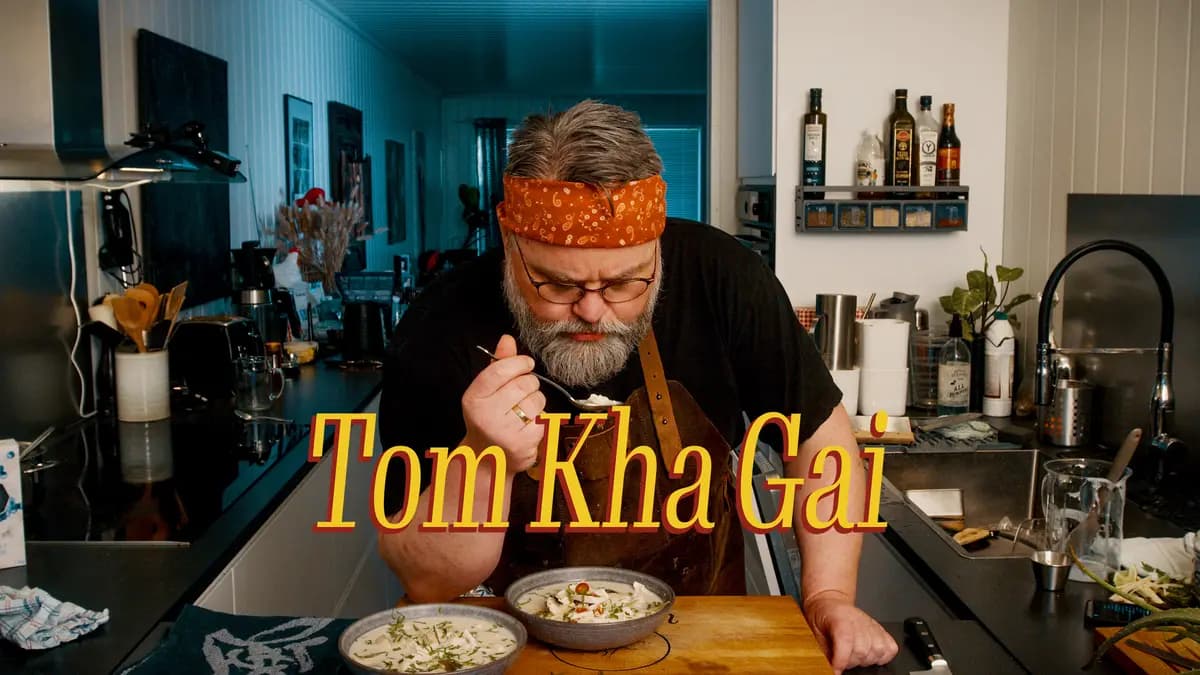
Tom Kha Gai is one of Thailand's most famous soups, loved for its perfect balance of creamy coconut milk, fresh lime, and aromatic herbs. This dish is both easy to make and impressive in flavor.
- Servings
- 2 servings
- Prep
- 5 min
- Cook
- 20 min
Ingredients
- 400 ml coconut milk
- 3 dl chicken broth
- 300 g chicken thigh fillet
- 150 g mushrooms
- 4 slices of galangal or ginger
- 2 stalks of lemongrass
- 4 kaffir lime leaves
- 2 tbsp fish sauce
- 1 tbsp fresh lime juice
- 1 tsp sugar
- 1 chili
- Fresh coriander
Instructions
- Mise en place: Slice the chicken thinly, chop the mushrooms, crush the lemongrass, and measure out all ingredients.
- Bring the chicken broth to a boil with galangal, lemongrass, and lime leaves in a pot.
- Let it simmer for 5 to 10 minutes to build flavor.
- Lower the heat and add the coconut milk.
- Keep the temperature below boiling point.
- Add the chicken and let it simmer until cooked through, about 5 to 7 minutes.
- Add the mushrooms and chili, and let it simmer for 2 to 3 minutes.
- Adjust the flavor with fish sauce, lime juice, and sugar.
Tom Kha Gai is a classic soup from Thailand, where “Tom” means to boil, “Kha” refers to galangal, and “Gai” means chicken. The dish is part of the Thai culinary philosophy of balance, where sour, salty, sweet, and creamy play together. The exact origin is not fully documented, but the dish has been a central part of traditional Thai food for a long time.
Tom Kha Gai is one of the most iconic dishes from Thailand, and it represents the core of the Thai culinary philosophy. It’s all about balance. When you make this soup correctly, you achieve a harmonious combination of creamy, tangy, salty, and slightly spicy flavors. It is precisely this balance that makes the dish so special, and at the same time, so dependent on precision.
One of the key ingredients in Tom Kha Gai is galangal. Many substitute it with ginger, and while that works, it doesn’t yield the same result. Galangal has a fresher, more citrusy, and slightly peppery flavor, while ginger is warmer and spicier. The difference may seem small, but in such a pure and balanced dish, it becomes evident.
Lemongrass and kaffir lime leaves also play a crucial role. These ingredients give the dish its characteristic aroma. It’s important to let these infuse in the broth before adding the coconut milk. This step builds the foundation of the flavor, and it’s where many go wrong by rushing ahead.
When the coconut milk is added, the temperature must be controlled. If the soup boils too hard, the coconut milk can separate. This negatively affects both texture and flavor. Therefore, the dish should only simmer gently after this point.
Chicken thigh fillet is preferred over breast. It has more fat and provides a juicier and more flavorful soup. Slice the chicken thinly so it cooks evenly and quickly.
Adjusting the flavors at the end is perhaps the most important step. Fish sauce adds salt and umami, lime juice adds acidity, and sugar rounds out the overall flavor. This is where you adjust the dish to perfect balance. A good Tom Kha Gai should never taste solely of coconut. It should be complex and fresh.
Texture also plays a role. The mushrooms provide a mild earthy contrast to the fresh flavors, while coriander on top adds a green and slightly peppery lift.
Serving is simple but important. The dish is served piping hot, preferably with jasmine rice on the side. The herbs in the soup are not meant to be eaten but serve as flavor enhancers during cooking.
Tom Kha Gai is a dish that showcases how powerful simple food can be when technique and balance are on point. It doesn’t require advanced equipment or complicated methods, but it rewards accuracy and understanding of the ingredients.
Once you master this dish, it opens the door to the rest of Thai cuisine. The principles you learn here apply to a variety of other dishes. It’s about tasting, adjusting, and understanding how each ingredient affects the whole.
Photos
Note: Information may contain errors. Always verify important facts yourself.
What to read next

Beef Roast with Baby Potatoes
Beef roast with potatoes, vegetables, and brown sauce is a dinner that doesn't require many modern techniques. The most important factors are good meat, the right core temperature, and preserving the juices and drippings along the way.

Cauliflower Soup with Crispy Bacon
Cauliflower soup is one of those dishes that shows how little it takes to make a good dinner. Here, I let the cauliflower be the main flavor and use chicken stock and a bit of cream to give the soup body. On top, there's crispy bacon and small cauliflower florets sautéed in the bacon fat.

Pan-Seared Salmon Fillets with Cucumber Salad
Pan-seared salmon fillets with cucumber salad is a simple dinner that doesn't require many ingredients. The key is to control the temperature in the pan and allow the salmon to form a crust before attempting to flip it.